

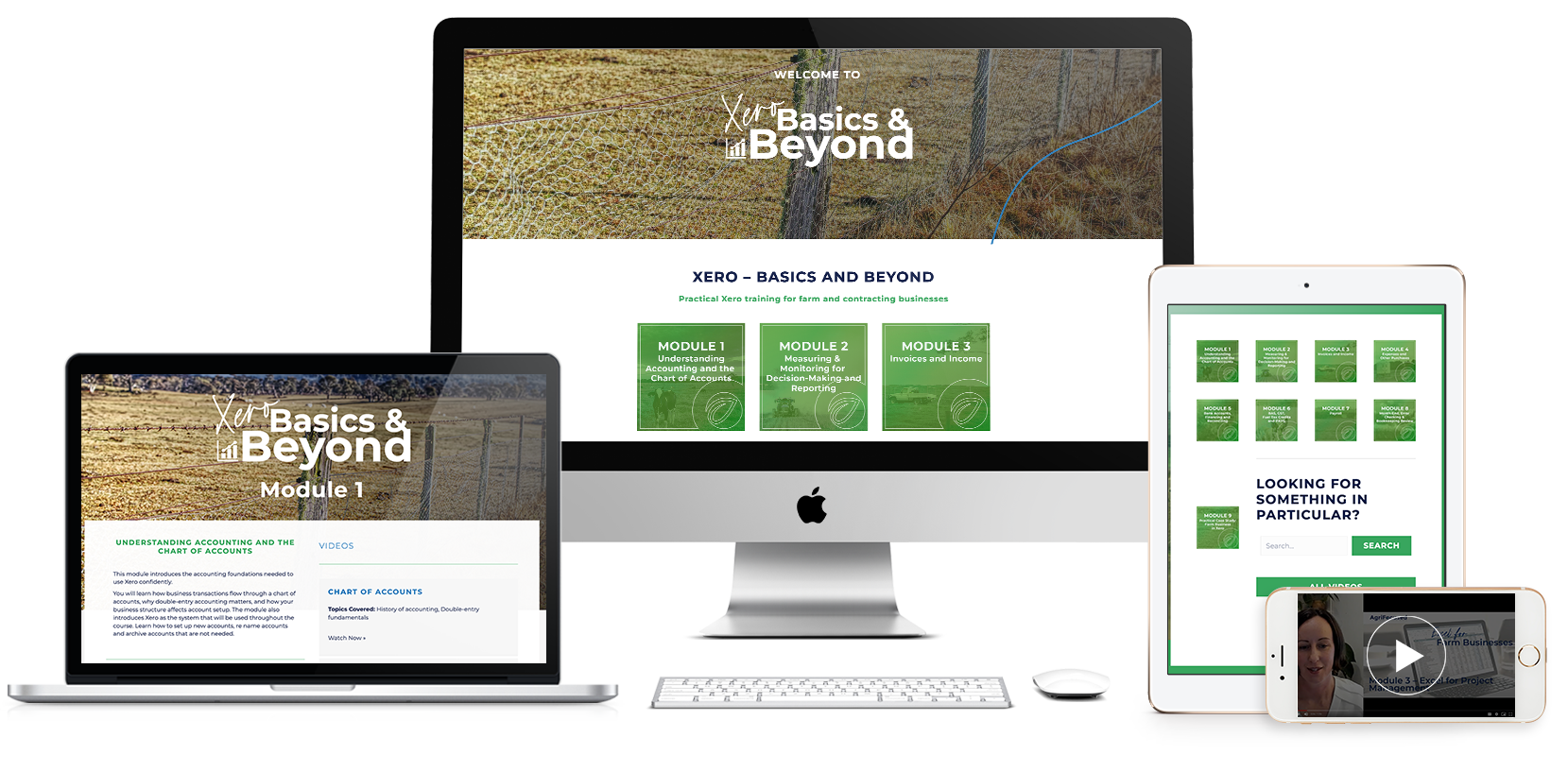
Practical Xero training for farm and contracting businesses
Use Xero with more confidence, more accuracy and more purpose
Whether you are brand new to Xero, have inherited the books, or have been using Xero for years but know you are only using a fraction of what it can do, this course will help you build confidence, reduce mistakes and get more useful information from your records.
Xero can be more than somewhere to reconcile transactions before BAS time.
Used well, it can help you understand your business, monitor performance, manage cash flow, prepare for conversations with your accountant and make better decisions with information that is accurate, current and easy to find.
This course will help you go from:
“I think I’m doing it right…”
to
“I understand what I’m looking at, I know where the information is, and I can use Xero to support better business decisions.”
For the new user and the under-using experienced user
This course has been designed for two very common groups of people in farming and contracting businesses.
1. You are new to Xero, or new to managing the books
- Maybe you have taken over the office role because of succession, growth, a staff change, a family change or because someone had to do it.
- You might be capable in every other part of life and business, but Xero still feels like another language.
- You are not looking for jargon. You are looking for a clear, practical explanation of what to do, why it matters and how to avoid making expensive or time-wasting mistakes.
2. You already use Xero, but you know there is more it could be doing
- Maybe you can reconcile the bank account, send invoices and lodge BAS information, but you suspect you are only using 50% of Xero’s capability.
- You want to know how to use reports better.
You want your chart of accounts to make more sense. - You are putting the information in, you want to know how to get it out.
You want tracking, item codes, invoices, bills, bank rules, payroll and reporting to work together properly.
You want to stop using Xero as a compliance tool only and start using it as a business management tool.
This course respects both starting points.
You can begin with the basics, or move straight to the modules that help you refine and improve what you are already doing.
Why Xero matters in a farm or contracting business
There are RCTIs, livestock sales, grain income, contracting invoices, fuel tax credits, machinery finance, family loans, equipment purchases, casual employees, piecework, BAS, GST, payroll, supplier accounts, seasonal cash flow and reporting needs that do not always fit neatly into a standard small business example.
It is easy to use Xero just enough to get by.
But when Xero is set up and used properly, it can help you answer better questions:
- Which enterprises or jobs are actually making money?
- What is machinery really costing
- Is contracting making a profit or just covering costs?
- Are invoices, bills, loans and GST being treated correctly?
- What needs to be fixed before BAS or an accountant review?
- Can I find the information I need quickly, without digging through emails, paper or memory?
- Is the business actually improving, or just busier?
Good Xero use is not about being perfect.
It is about having a system that gives you confidence, saves time and supports better decisions.

Manage the office side of
your farm business with greater confidence and in less time

I have really enjoyed and valued the zoom discsussions that. It is a great way of gaining insight and information from like minded people - Katrina
I worked through the course a year ago and can say that I'm still implementing the practises I gleaned from the course.I value that I still have access to the content to refer back to.Carmen is a great teacher and presents the content in an engaging and understandable way.I would say this course is a must do for anyone given the task as administrator for a farm office.So thankful to have done this course,it gave me the confidence I needed and has been the catalyst to pursue further study in agribusiness - Maree
Congratulations on providing wonderful course content for Farm Office Plus. It is exactly what I needed - Belinda
Confidence and competence in the home office. I realized I was actually doing quite a decent job but also learnt a few tips and tricks that have helped.
Great place to start when new to farm office. Some great ideas to look at adding into an existing system. The few online sessions I’ve been able to get to were very useful
I really found the course beneficial to help me get my mind clear and point me in the direction that I knew I needed to go but was finding it hard to move forward.
The course has given me the confidence to upgrade my accounting software, and to put systems in place to better track my farm business. Learning from not just the course material, but also the online meetings, I am in a better position to question systems, and put more efficient ones in place - Sally
It cements what I'm doing is on the right track. Gives me ideas on how to improve in certain areas. A great network with other people tackling farm bookwork - Jen
I got a lot of useful, practical tips from the course that made office work feel less like a chore and more manageable (even enjoyable at times). It helped me look at paperwork differently instead of just seeing it as another thing on my to-do list. Going paperless was a total game changer, it’s quicker, less cluttered, and way easier to find things when needed, even in the middle of the paddock at 10pm! - Sally
This course will help you
This is not just “how to click the buttons”
You can find short tutorials online that show you where to click.
This course goes further.
It explains what is happening behind the screen, why transactions need to be coded correctly and how the decisions you make in Xero affect the reports you rely on later.
Because in a farm or contracting business, the real value is not just entering the data.
The value is being able to trust the information.
When you understand what Xero is doing, you are better able to:
- notice when something looks wrong
- ask better questions of your accountant or bookkeeper
- set up systems that reduce repeat mistakes
- use reports before decisions are made, not months after
- move from reactive bookkeeping to proactive business management
Who this course is for
Farm Business Owners
For farmers who want to understand their numbers better, reduce the mystery around Xero and make more confident business decisions.
You do not need to become an accountant.
But you do need to understand enough to know whether the information in front of you is useful, accurate and telling you something important.
Farm office managers and rural admin staff
For the person holding the office together, paying the bills, reconciling accounts, chasing paperwork, managing payroll and trying to keep everything moving.
This course will help you create more structure, reduce mental load and build confidence that the information in Xero is being handled properly.
Agricultural contracting businesses
For contractors managing jobs, machinery, fuel, repairs, staff, invoices, customers, debtors and seasonal cash flow.
Make cashflow management easier with timely bill paying and invoicing customers.
You will learn how Xero can support better reporting, clearer invoicing and more useful information about income, costs and business performance.
Bookkeepers and advisors supporting rural businesses
For those who already understand bookkeeping but want more confidence applying Xero to the realities of farm and contracting businesses.
This course includes rural examples that reflect the way agricultural businesses actually operate and show you easy ways to extract management accounting information.
What you will learn
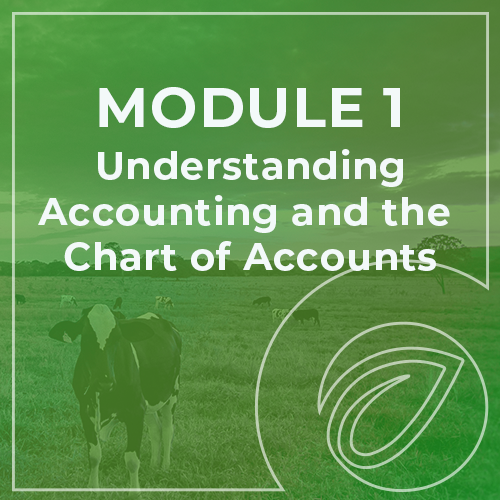
Module 1: Understanding Accounting and the Chart of Accounts
Start with the foundations.
You will learn how business transactions flow through Xero, why the chart of accounts matters and how account names and codes affect the usefulness of your reports.
This module covers business structures, account types, opening balances, users, permissions, two-factor authentication, audit history and lock dates.
You will also look at clear naming conventions and how to review, edit, import or archive account codes so your Xero file is easier to understand.
Transformation:
From “I just code things where I think they go”
to “I understand how the chart of accounts works and how to make it useful.”
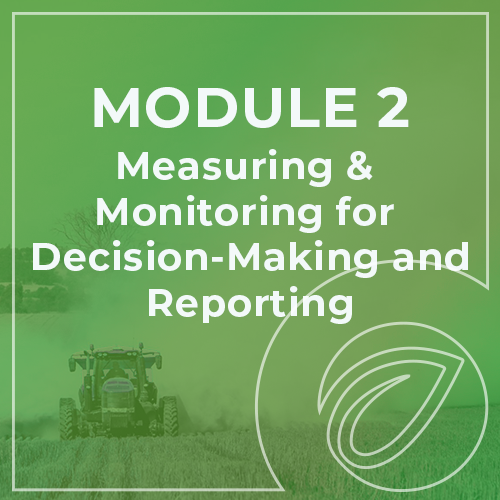
Module 2: Measuring and Monitoring for Decision-Making and Reporting
This is where Xero starts becoming more than a bookkeeping program.
You will learn how to use item codes, account codes, tracking categories, custom reports, budgets and the Xero app to monitor performance and find useful information.
You will look at profit and loss reports, balance sheets, cash summary reports and reporting by enterprise, division, machinery cost or cost centre.
Transformation:
From “I only look at reports when the accountant asks”
to “I know how to use reports to understand what is happening in the business.”
Module 3: Invoices and Income
Learn how to record income properly for rural and contracting businesses.
This module covers customer setup, sales invoices, contracting invoices, RCTIs, item codes, quotes, invoice templates, payment options, statements, credit notes, repeating invoices, grants, prepayments and bank interest.
You will also look at aged receivables, invoice terms, part payments, deposits, customer overpayments and payment follow-up.
Transformation:
From “money came in, so I reconciled it”
to “income is recorded clearly, followed up properly and reported usefully.”

Module 4: Expenses and Other Purchases
This module focuses on supplier transactions and outgoings.
You will learn when to enter bills, when to use spend money, how to attach receipts, manage batch payments, handle payments from personal accounts, compare supplier statements and process credit notes or overpayments.
Examples include livestock purchases, machinery repairs, fodder, animal health, utilities, fuel tax credit item codes, capital purchases, assets, equipment finance, drawings and owner wages.
Transformation:
From “I just reconcile expenses as they appear”
to “I understand how different expenses should be entered, supported and reviewed.”
Module 5: Bank Accounts, Financing and Reconciling
Bank reconciliation is one of the most common areas where Xero users gain speed but also make mistakes.
This module covers overdrafts, loans, credit cards, equipment finance, government loans, stock finance, family loans, bank feeds, transfers, split principal and interest coding, bank rules and the risks of over-relying on auto-coding.
You will learn how to reconcile more confidently and review transactions before locking them in.
Transformation:
From “Xero suggested it, so I clicked OK”
to “I know when to trust a rule, when to question it and how to keep the file accurate.”
Module 6: BAS, GST, Fuel Tax Credits and PAYG
This module helps you understand what needs to be checked before BAS time.
You will learn about GST coding, BAS settings, common GST errors, GST audit reports, fuel tax credits, rebates, PAYG, ATO payment allocations and BAS lodgement readiness checks.
The focus is not just preparing figures, but understanding whether the figures make sense.
Transformation:
From “I hope the BAS is right”
to “I know what to review before BAS and where common errors hide.”
Module 7: Payroll
Payroll in rural businesses can involve casual workers, full-time employees, piecework, shearers, timesheets, allowances, deductions, superannuation and seasonal workflows.
This module covers employee setup, onboarding, Xero Me, timesheet tools, scheduled and unscheduled pay runs, super, batch transfers, STP, payroll categories, leave, terminations, payroll reconciliation and EOFY finalisation.
Transformation:
From “payroll feels risky and confusing”
to “I understand the workflow and know what needs to be checked before payroll is finalised.”
Module 8: Month-End, Error Checking and Bookkeeping Review
This module shows you how to review your Xero file regularly so errors are found before they become bigger problems.
You will learn how to review bank accounts, credit cards, loans, aged receivables, aged payables, GST coding, payroll liabilities, PAYG withholding, superannuation payable, suspicious balances, duplicated transactions and miscoded entries.
You will also look at trial balance, general ledger, bank reconciliation summary, aged reports, GST reports, clearing accounts, suspense accounts, lock dates and when advisor input is needed.
Transformation:
From “I only find problems when the accountant points them out”
to “I have a repeatable review process that keeps the file cleaner all year.”
What changes after this course?
You will not just know more about Xero.
You will think differently about the role it plays in your business.
Before the course
- Xero feels like a compliance job
- Reports are confusing or underused
- Coding decisions feel uncertain
- BAS time creates pressure
- Bank rules save time but may hide mistakes
- The accountant or bookkeeper is the only person who really understands the file
- You are not sure whether your information is accurate enough to rely on
After the course
- You understand how Xero is structured
- You can record common farm and contracting transactions with more confidence
- You know how to review your own file
- You can use reports to support decisions
- You know what to ask your accountant or advisor
- You can identify mistakes earlier
- You can use Xero as a management tool, not just a compliance tool
For the experienced Xero user who knows there is more
This course is not only for beginners.
It is also for the person who has been using Xero for years and has quietly wondered:
“Am I doing this the best way?” and “I pay a lot for Xero, and I think I can probably use it better”
Maybe you have a system that works, but it is clunky.
Maybe you reconcile regularly, but reports are not telling you much.
Maybe you use bank rules, but you are not sure they are always right.
Maybe your accountant fixes things at year-end, but you would rather understand what is happening earlier.
Maybe you know Xero has more capability, but you have never had time to stop and learn it properly.
Perhaps you have moved to Xero from an ag specific program and want to know how to extract the same information you were used to accessing.
This course helps you refine what you are already doing.
Small improvements in setup, coding, reporting and review can make a big difference across the year.
For the new user who does not want to make a mess of it
If you are new to Xero, this course will meet you where you are.
You do not need advanced accounting knowledge.
You do not need to already understand every report.
You do not need to pretend you know what everything means.
The course starts with the foundations and builds gradually, using practical farm and contracting examples so the learning makes sense in your world.
You will learn the language, the logic and the workflows behind the program so you can use Xero with more confidence.
Course Access
This course is delivered online so you can work through it at your own pace, from your own office, around the realities of farm, family, contracting work and seasonal pressure.
You can start at the beginning or choose the modules most relevant to you.
You will receive access to practical lessons, examples and resources designed to help you apply the learning directly to your own Xero file and business situation.
Manage the office side of
your farm business with greater confidence and in less time
Course Investment
Xero for Farm and Contracting Businesses
Practical online training for rural businesses wanting to use Xero more confidently and more fully.
$800 + GST
Includes:
- Online course access
- Practical farm and contracting examples
- Step-by-step Xero training
- Reporting and review guidance
- BAS, GST and fuel tax credit explanations
- Payroll workflow guidance
- Month-end and quarter-end review checklists
- Resources to help you apply the learning in your own business
Manage the office side of
your farm business with greater confidence and in less time

Course presenter
Carmen Quade
Carmen Quade is the founder of AgriFocused and understands that farm offices do not operate in isolation.
There is always other work happening. There are paddocks, staff, contractors, family, weather, machinery, livestock, customers, accountants and deadlines all competing for attention.
This course has been developed from the perspective of real farm and contracting businesses — where the goal is not to become an accountant, but to understand the system well enough to use it properly.
Carmen’s teaching style is practical, clear and grounded in the realities of rural business.
The aim is to help you feel less overwhelmed, reduce mistakes and build confidence in the information you use to run your business.
FAQs
Want to know more?
Talk to Carmen Quade about this course via email:
We welcome the opportunity to talk to you about how our course may fit your needs, and will recommend you elsewhere if it does not.
Xero for Farm and Contracting Businesses
Practical online training for rural businesses wanting to use Xero more confidently and more fully.
$800 + GST
Includes:
- Online course access
- Practical farm and contracting examples
- Step-by-step Xero training
- Reporting and review guidance
- BAS, GST and fuel tax credit explanations
- Payroll workflow guidance
- Month-end and quarter-end review checklists
- Resources to help you apply the learning in your own business
